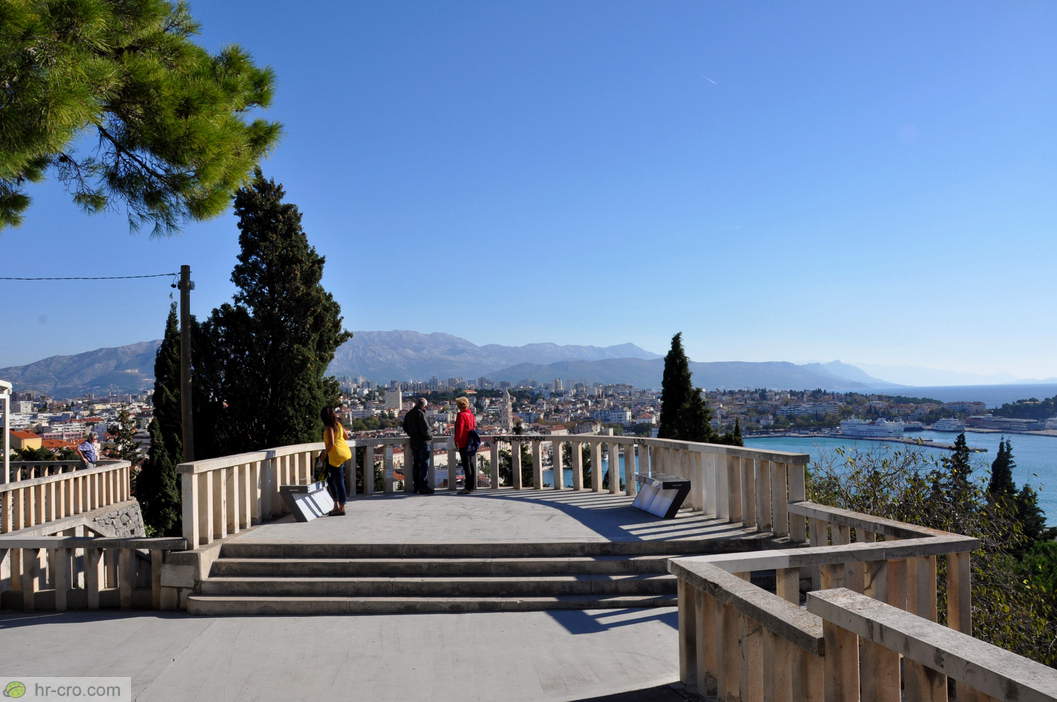
Marjan is a hill on the peninsula of the picturesque city of Split, which is the largest city in Croatian Dalmatia. It is covered with a dense Mediterranean pine forest and completely surrounded by the city and the sea, which gives it unique views. Already in the 3rd century, the inhabitants used it as a park, but today it is a popular excursion spot and a recreational center of the city.
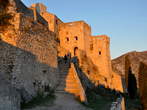
In the Marjan Forest Park there are many running tracks, it is the starting point for many beaches and the city zoo. The Institute of Oceanography and Fisheries is also located on the peninsula. The Marjan hill is 178 meters high and offers views of the entire city, the surrounding islands and the nearby mountains Mosor and Kozjak. In ancient times, Emperor Diocletian built a palace just a few minutes away from Marjan. Between 8,000 and 10,000 people settled in the palace, expecting parks and recreational space. There is a small rustic church from the early 13th century on the hill. The church was dedicated to Saint Nicholas, the favorite saint of fishermen. The church of St. Jerome from the 15th century also stands along the southern outskirts of Marjan. The church has an altar carved by Andrija Alesi. Behind the church is a group of Renaissance caves carved into the crevices of the cliffs, which were first used in the 15th century. On the eastern slope of Marjan, just above the town, there is an old Jewish cemetery. The cemetery dates back to 1573 and contains around 700 graves, with tombstones from the 18th century to the 20th century.
The last burial was in 1945, after which the cemetery was closed and protected as a monument in the same year. Marjan has become a symbol of the city of Split in the last century and a half, before that it was just an ordinary part of the landscape. Residents began to use it as a place for picnics and romantic walks, and the many nearby beaches also contributed to its popularity. During the Second World War, Marjan was the subject of the popular partisan song Marjana, Marjana, which was sung by members of the anti-fascist movement and was said to be the favorite song of the leader of the rebellion and the future president of Yugoslavia, Josip Broz Tito. Tito was so impressed by the hill that he also had a summer residence here, Villa Dalmacija. In the 1950s, the federal government, together with the local Split authorities, implemented a huge project to transform the entire wild forest into a beautifully landscaped forest park. A number of recreational facilities have been built on Marjan Hill, including running tracks, a road system that encircles the peninsula, a maritime research institute, a zoo that is now in poor condition, a botanical garden that has been abandoned, and a water system that reaches all the way to the top of the hill.
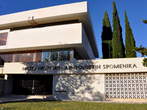
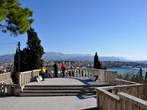
They also built a weather station and two observation decks as well as rest areas, which are connected by a long staircase all the way to Diocletian's Palace, the promenade and the rest of the city. On the south side of Marjan is the Mestrovic Gallery, which has premises in the former villa of Ivan Mestrovic. Mestrovic is known as one of the greatest sculptors of religious buildings since the Renaissance.
 HR-CRO - Croatia