Imotski is a Mediterranean town on the northern side of the Biokovo massif in the Dalmatian hinterland of southern Croatia, close to the border with Bosnia and Herzegovina. The nearest coastal town is Makarska, which is famous for its beaches on the Makarska Riviera, its seaside promenade and its nightlife.
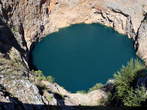
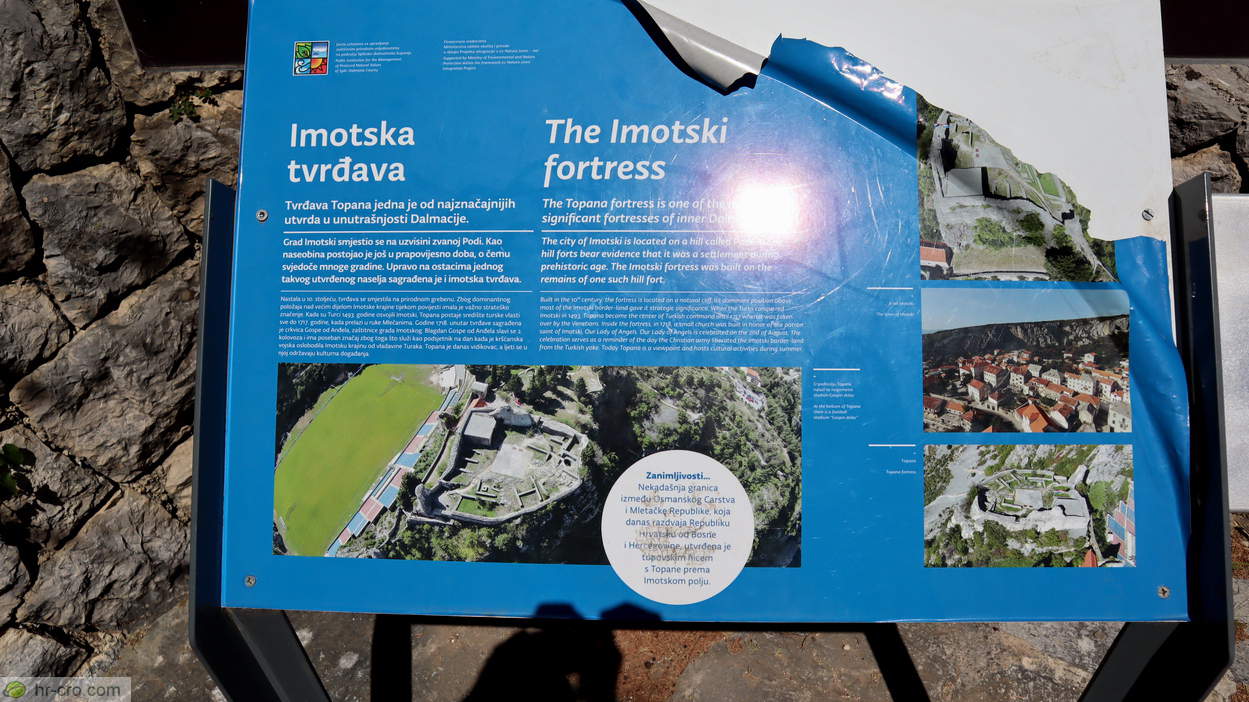
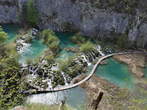
The landscape around Imotski was inhabited already in the Younger Stone Age. During the period of the Illyrians and the Romans it was known as Emotha and later Imota. Imotski, like the surrounding inland Dalmatia, has a generally mild Mediterranean climate, making it a popular tourist destination. Among the cultural and historical sights, the most important are the Topana fortress, the Franciscan monastery, the church of St. Francis of Assisi, the Benzon house, the Mazzi house, the Colombani house, a statue of Vladot Gotovac, a statue of the poet and writer Tino Ujević and more. The town of Imotski is located on a hill called Podi. Numerous construction sites prove that there was a settlement already in prehistoric times. The Topana fortress was built in the 10th century on the remains of one such building. It lies on a natural cliff above Blue Lake. Its dominant position over a large part of the estate's territory gave it strategic importance. When the Turks conquered Imotski in 1493, Topana became the center of Turkish command until 1717, when it was taken over by the Venetians. Inside the fortress, a church was built in 1718 in honor of the protector of Imotski, Lady of Angels. Our Lady of the Angels is celebrated on August 2. The celebration commemorates the day when the Christian army liberated the Imot border from the Turkish yoke. The fortress was completely abandoned in 1816. Today, Topana is a viewpoint and hosts cultural activities in the summer. It is one of the most important fortresses in inner Dalmatia. The Gospin Dolac football stadium is located under Topana. Among the natural attractions, the Blue and Red lakes stand out. Blue Lake can be 500 meters wide and 800 meters long during the period of maximum water volume. The maximum depth is 90 meters. Steep walls rise above the lake, and a walking path leads to the surface of the lake.
Red Lake is the deepest lake in Croatia and one of the deepest karst lakes in the world. It was formed by the collapse of the ceiling of a large underground cavity. The lake is a large reservoir of drinking water and a habitat for many plant and animal species, some of which are endemic.
 HR-CRO - Croatia
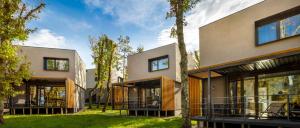
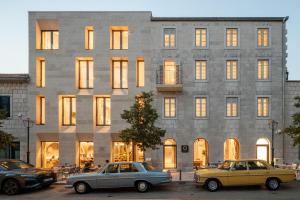 ImotskiEmotheo Heritage Hotel