Imotski is a small town on the northern side of the Biokovo Mountains in the Dalmatian hinterland of southern Croatia, near the border with Bosnia and Herzegovina. Imotski, like the surrounding mainland Dalmatia, has a mild Mediterranean climate, making it a popular tourist destination.
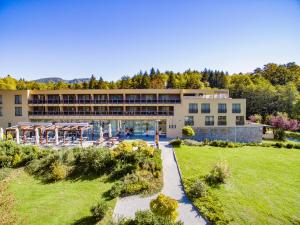
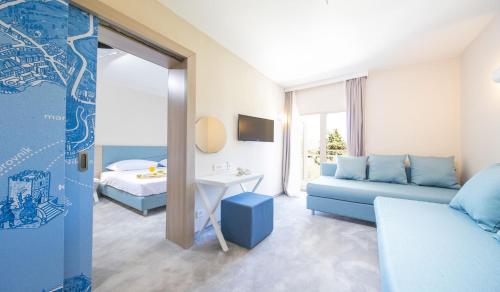
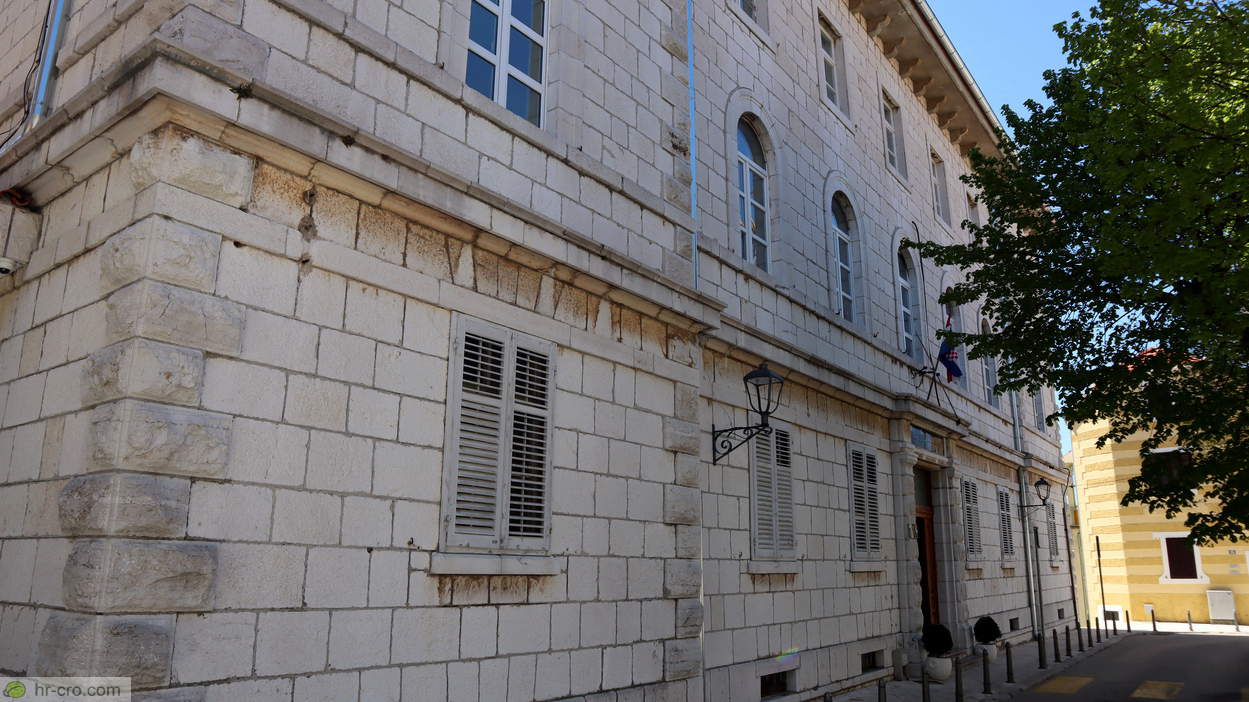
The town is located near the border with Bosnia and Herzegovina, 10 km from Posusje and 18 km from the town of Grude. It is located 29 km from the coast (Baska Voda). The nearest coastal town is Makarska, on the other side of the mountain massif Biokovo. Imotski is known for its medieval fortress on the rocks of Blue Lake. Blue Lake is a popular promenade, and in the summer the main beach in Imotski. The stone serpentines, built in 1907, lead to a clear sea water. Another famous natural phenomenon is Red Lake, which looks like an eye in the landscape. Both lakes are said to be connected by underground canals to the Adriatic Sea. The area around Imotski was already inhabited in the Neolithic. In the time of the Illyrians and Romans it was known as Emotha and later Imota. With today’s names, it was first mentioned by Emperor Constantine Porphyrogennetos in the 10th century. The fortress above the town, Topana, was first mentioned in the 9th century, during the time of Croatian rulers. The Turks owned Imotski from the fall of Bosnia in 1492 until 1717, when it was captured by the Venetians. In April 1717, a small church dedicated to the Angelic Lady was built in honor of the victory against the Turks. The Angelic Lady was then honored as the patron saint of Imotski and the Imotski region. The folk ballad Hasanaginica originated in the Imotski region in the middle of the 17th century. A secondary school was built in Imotski in 1912, when the town was part of the Kingdom of Dalmatia within the Austro-Hungarian Empire. From 1941 to 1945, Imotski was part of the Independent State of Croatia. Many events take place near the fortress in the summer, and below it is a monument to Croatian veterans, the work of the academic sculptor Kruna Bosnjak. From Topana we descend a series of 92 stone steps, built in the 18th century, to Imotski Square, where there is a monument to the great poet and local Tin Ujević. The Imotski region is known for its tradition and culture, as well as for the ganga - traditional singing. In addition to natural and cultural beauties and diversity, today in Imotski you can find quality hotel and apartment accommodation, holiday homes with swimming pools and excellent gastronomic offer.
There are also wine roads along which visitors can enjoy tasting quality and award-winning wines or tasting Dalmatian sparkling wine. Those who want to get closer to their former life can visit eco villages.
 HR-CRO - Croatia
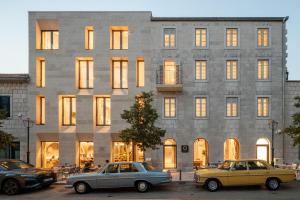 ImotskiEmotheo Heritage Hotel