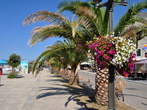
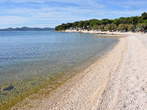
Pakostane is a tourist settlement and the center of the municipality of the same name in northern Dalmatia in Croatia, which administratively belongs to Zadar County. It is located in a picturesque setting between the Adriatic Sea and Lake Vransko, the largest natural lake in Croatia, between Zadar and Biograd na Moru.
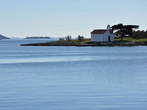
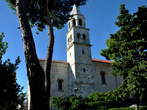
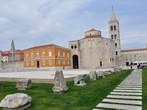
Due to their exceptional location, rich history, and beautiful nature, they are among the most popular tourist destinations on this part of the Adriatic coast. The area was already inhabited in Roman times, as evidenced by remains of ancient villas, a Roman port, and other archaeological finds. Over the centuries, the place was influenced by the Venetians, the Templars, and Turkish invasions. Among the local landmarks, the parish church of the Assumption of the Lord on King Tomislav Square stands out, representing the central symbol of Pakostane. The present church is a large three-nave building, constructed in 1906 according to the plans of architect Cirilo Ivekovic on the site of an older church. During construction, some elements of the previous sacred building were preserved, including part of the old altar. Inside the church there is a main altar depicting the Assumption of the Lord and side altars dedicated to Our Lady of the Rosary, Saint Anthony of Padua, and Saint Roch. The church, consecrated in 1912, is considered one of the most recognizable cultural and religious landmarks of the town. In the immediate vicinity there is a lapidarium with stone fragments and archaeological remains, which complement the historical and cultural image of the church complex and testify to the multilayered sacred tradition of the place. Not far away stands a statue of the Croatian archbishop and cardinal Alojzije Stepinac (1898-1960), which represents an important commemorative and religious element. An important part of the sacred heritage is the church of Saint Justin, located on the small island of the same name in front of the town. It was built in the 17th century on the foundations of an older church, and next to it is an old cemetery. Its location in the sea gives it a special scenic quality and makes it one of the most recognizable images of Pakostane. The older parish church of Saint Michael from 1694 was for a long time the center of religious life. In 1715 it was consecrated by Archbishop Vicko Zmajevic, and a cemetery was arranged around it, which testifies to its historical importance for the town. Among the sacred buildings, the church of Saint Roch from the 18th century also stands out, which was later renovated, reflecting changes in the purpose of some historical buildings over time. Visitors can also see the statue of Franjo Tudjman, the first President of the Republic of Croatia. In the nearby town of Vrana there is the old town of Vrana with remains of a Templar fortress and monastery, a Benedictine monastery, the seat of the Vrana prior, and Maskovica Han, one of the best-preserved monuments of Ottoman architecture in Croatia.
Today, Pakostane, with its rich cultural heritage, historical churches, and natural beauty, represent an important tourist and cultural point of northern Dalmatia, where tradition, history, and Mediterranean lifestyle intertwine.
 HR-CRO - Croatia
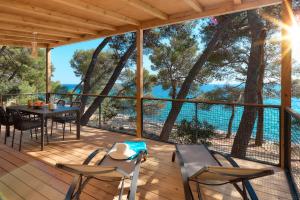 PakoštanePine Beach Pakostane Glamping Homes - All Inclusive light