Trogir is a town and port in central Dalmatia, located about 25 km from Split, in the Trogir Channel at the end of Kastela Bay. It is the administrative centre of the town municipality of the same name, which belongs to the Split-Dalmatia County. The historic old town is situated on a small island between the mainland and the island of Ciovo.
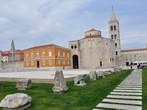
Trogir is marked by more than two thousand years of history. Its appearance has been shaped by the influences of the Greeks, Romans, and Venetians. In 1997, it was inscribed on the UNESCO World Heritage List. The most important cultural and historical landmarks include the city walls, the northern (land) city gate, the Church and Monastery of St Dominic, the Trogir City Museum, the Kamerlengo Fortress, Ivan Paul II Square, the Petar Berislavic Primary School building, the Church of St John the Baptist, the Small and Large Cipiko Palaces, the Vitturi Tower, the Tower of St Mark, the Town Hall, the Benedictine Monastery and Church of St Nicholas, and the Church of All Saints. The Church of St John the Baptist is one of the oldest sacral buildings in the town. It is located in the immediate vicinity of Ivan Paul II Square, next to the large complex of the former Benedictine monastery, which was founded around 1064 by members of the distinguished Trogir noble family Cipiko—one of the key families in shaping the cultural and religious life of medieval Trogir. The church is dedicated to St John the Baptist, one of the central saints of the Christian faith, which further emphasizes its original symbolic and spiritual significance. The Romanesque church was built at the end of the 12th and the beginning of the 13th century on the site of an early Christian structure within a male Benedictine monastery. It is an elongated single-nave building with a rectangular apse and a side square apse positioned on the northern side of the presbytery. The church is constructed of regularly cut stone blocks and covered with a gabled roof clad with traditional clay tiles. The main portal features a profiled stone frame with octagonal columns and a lunette with an oculus depicting a sculpture of the Lamb of God. On the southern facade, the coat of arms of the Cipiko family and the figure of a Benedictine monk are depicted. A distinctive feature of the church is the double bell gable (bellcote) rising above the facade, with two bell openings—a motif characteristic of many early medieval churches in Dalmatia. The roof was restored in the 1930s.
The church is registered as immovable cultural heritage—an individual monument with the legal status of a protected cultural property, classified as part of the sacral architectural heritage. Today, the church is no longer used for regular liturgical services, but it remains a valuable cultural and art-historical monument.
 HR-CRO - Croatia
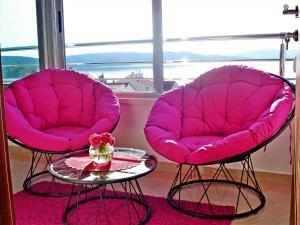 TrogirApartments Linda