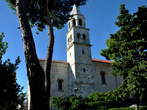
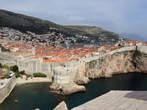
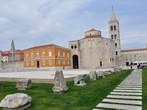
Biograd na Moru is a coastal town and a popular tourist destination in Northern Dalmatia, Croatia, administratively part of Zadar County. It is situated on the Pasman Channel, about 30 kilometres south of Zadar, between the bays of Bosana and Soline.
The town, which served as an important royal and coronation centre of the Croatian Kingdom during the 11th century, today combines the remains of its medieval past with sacred monuments, museum collections, and modern tourist facilities. Its most notable attractions include the Parish Church of St. Anastasia, the remains of the Basilica of St. John the Evangelist, several town monuments, and the Local History Museum, which presents the rich cultural and historical heritage of Biograd and its surrounding area. The Biograd Local History Museum (Zavicajni Muzej) is located in the town centre, directly along the waterfront. The museum building is itself an important cultural monument, as it was constructed on the remains of the medieval town walls at the end of the 18th century and the beginning of the 19th century. For many years, it also housed the District Court established during the reign of Emperor Franz Joseph I. Today, the museum is the central cultural institution of the Biograd area, dedicated to preserving, researching, and presenting the historical and cultural heritage of the town and its surroundings. The museum's collections present different periods of Biograd's history, ranging from archaeological finds to more recent times. They include an archaeological collection, an ethnographic collection, a historical department, an art collection, and the special cultural and historical exhibition Cargo of a 16th-Century Shipwreck, regarded as one of the most significant maritime collections on the Adriatic. The museum's greatest attraction is the collection of artefacts recovered from a Venetian merchant ship that sank in the Pasman Channel near the islet of Gnalic in 1583, a few kilometres south of Biograd. The ship carried a wide range of valuable goods intended for trade throughout Mediterranean ports. After lying on the seabed for nearly four centuries, the wreck was accidentally discovered by fishermen from the island of Murter in 1967. Subsequent underwater archaeological excavations uncovered numerous artefacts that today provide valuable insight into 16th-century trade, seafaring, and everyday life. Among the exhibited objects are parts of the ship's equipment and inventory, including large anchors, bronze cannons, cannonballs, copper and pewter tableware, and various items from the ship's galley. A particularly valuable part of the exhibition consists of the commercial cargo, featuring glassware, ceramics, mirrors, textiles, and numerous everyday objects. Rather than telling only the story of a single shipwreck, the collection offers visitors a broader understanding of maritime connections, trade routes, and life in the Mediterranean during the Renaissance.
The Biograd Local History Museum is therefore one of the town's most important cultural attractions, linking Biograd's rich past with the stories of its inhabitants, maritime tradition, and historical development. A visit to the museum provides a deeper understanding of the town's evolution, from a medieval royal centre to one of the Adriatic coast's most popular tourist destinations.
 HR-CRO - Croatia
 Biograd na MoruHotel Adriatic