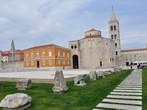
Biograd na Moru is a coastal town and a popular resort in Northern Dalmatia, Croatia, administratively belonging to Zadar County. It is located in the Pasman Channel, approximately 30 km from Zadar, partly on a peninsula and partly on the mainland, between the Bays of Bosana to the north and Soline to the south.
Off the coast there are also two smaller islands, Planac and St. Catherine, which give the town its distinctive maritime character and a well-protected harbour. The town has a rich history, as it is believed to have developed on the ruins of the Roman settlement of Blandona. In the Middle Ages, it was known as Alba Civitas and was an important political and ecclesiastical centre. The Croatian King Petar Kresimir IV was crowned here, and later also the Hungarian King Coloman. Biograd was destroyed and rebuilt several times, and during the 13th and 14th centuries it frequently changed rulers until it came under Venetian rule. Later, the town went through various political systems, from the Habsburg Monarchy to Yugoslavia, and eventually became part of modern Croatia. Archaeological finds, Roman villas in the surrounding area, and remains of early Croatian churches and jewellery testify to the long settlement history of the region. The tourist development of Biograd na Moru began between the two World Wars, when the first visitors, mainly from the Czech lands, started arriving in the 1920s. The first hotel was built in 1935 on the site of today's Ilirija Hotel. Today, Biograd is a modern tourist centre whose economy is primarily based on tourism, agriculture and fishing. The town is an important port for ferry connections to the island of Pasman and a starting point for exploring the surrounding area. Particularly popular are the old town harbour, with its fishing character, and Soline Bay, featuring a large sandy beach surrounded by a pine forest. Biograd offers visitors numerous accommodation options, including hotels, apartments and campsites, as well as two important marinas – Marina Kornati and Marina Sangulin, making it a popular destination for nautical tourism. The main local attractions include the Parish Church of St. Anastasia, built in the mid-18th century, the Basilica of St. John the Evangelist, the Museum of Local History, the Monument War of Independence, the Peace Monument, the Obalac Monument, the Monument to King Tomislav, the monument dedicated to the Armenian Vahan Melik Karaganan, often called the father of Biograd tourism, the monument to Pope John Paul II, and the monument to Dr Franjo Tudman, the first president of independent Croatia. The remains of the Basilica of Saint John the Evangelist bear witness to Biograd's rich medieval history. The Benedictine monastery and basilica were built in the 11th century by the Croatian King Petar Kresimir IV, but were almost completely destroyed in the 12th century during the Venetian conquest of the town. The Museum of Local History is located by the waterfront in the centre of the town, in a cultural and historical building that is itself an important monument. The museum preserves, researches and presents the rich heritage of Biograd and its surroundings. Among its most important collections is a collection of artefacts from the sunken 16th-century merchant ship near the islet of Gnalic. This unique collection introduces visitors to the history of maritime trade and life on the Adriatic in the past. The Monument War of Independence is located on King Tomislav Square. It is dedicated to all Croatian defenders and victims of the war in the 1990s. It was erected as a symbol of remembrance, gratitude and respect for all those who participated in the defence of their homeland. With its simple yet meaningful design, it represents an important part of the town's recent history. The Peace Monument is dedicated to the memory of the victims of Hiroshima and all victims of wars around the world. The crane is a symbol of peace, hope and the desire for a world without violence. The monument reminds visitors of the importance of preserving peace and the consequences of war tragedies. The Obalac Monument is a work by Croatian sculptor Ante Brcic. It is located along the town waterfront and, with its contemporary artistic design, represents a connection between the town, the sea and life on the Adriatic coast. The sculpture is one of the recognisable elements of Biograd's coastal appearance and an important part of its cultural heritage. The Monument to the Croatian King Tomislav stands at the beginning of the town promenade by the sea. It has the shape of an obelisk and was created based on an older monument from 1925, which was erected to mark the millennium of King Tomislav's coronation. Through its symbolism, it reminds visitors of an important period in Croatian history and the role of the first Croatian king. A monument to Pope St. John Paul II also stands along the town waterfront. He was closely connected with Croatia and its people. During his pontificate, he visited the country three times and is especially remembered for his support of peace and hope during the difficult times of the Croatian War. The monuments throughout the town are not only artistic elements but also represent memories of the people and events that shaped the history of Biograd and Croatia. Today, Biograd na Moru is a town where rich history, cultural heritage and modern tourist life come together. Due to its favourable location along the Pasman Channel, numerous beaches, marinas, natural beauty and proximity to the islands, it is a popular destination for lovers of the sea, nautical activities and active holidays.
At the same time, numerous historical remains, monuments and cultural attractions reveal to visitors the important role the town has played throughout the centuries. Biograd therefore combines the tradition of a Dalmatian coastal town with all the characteristics of a modern tourist centre and offers visitors a diverse experience througho
 HR-CRO - Croatia
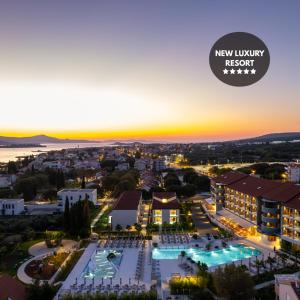 Sveti Filip i JakovMolum Hotel & Residences