Klis is a small but historically and strategically significant village that serves as the center of the Klis municipality in the Split-Dalmatia County. Located just a few kilometers northeast of Split, it sits along a vital roadway that crosses the pass between the Kozjak and Mosor mountain ranges, connecting Split with Zagreb via Knin.
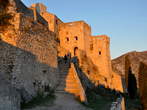
The village is renowned for its remarkable history and commanding position, epitomized by the iconic Klis Fortress, which towers above the settlement and offers breathtaking views of Split, the Adriatic Sea, and the Dalmatian islands. The history of Klis stretches back to ancient times. Archaeological discoveries in the nearby Krčine cave have revealed traces of human life dating to the Neolithic era, indicating the area's long-standing habitation. The first fortress was built in 852 as the court of Duke Trpimir, establishing Klis as one of the region's oldest strongholds. During the reign of Croatian rulers, Klis became the center of an early Croatian county and an important administrative and military hub. From the 12th century onward, it came under the control of various rulers, which left a lasting impact on the village’s cultural and architectural heritage. In 1537, the Ottomans conquered Klis, fortifying the castle and constructing a mosque with a minaret. Beneath the fortress, they built three concentric defensive walls, making it a key military and administrative center as the capital of the Klis Sanjak in the Ottoman Empire. However, in 1648, the Venetians reclaimed Klis, transforming the mosque into a church, demolishing the minaret, and modernizing the fortress to align with contemporary military strategies. The Venetians' extensive renovations gave the village much of its present-day character, including the architectural layout of the old town beneath the fortress. After the Venetian era, Klis became part of the Habsburg Monarchy in 1797, remaining under its rule until the monarchy's collapse. During this period, Klis briefly belonged to the French-ruled Illyrian Provinces between 1809 and 1813, adding another layer of historical and cultural significance to the area. Beneath the fortress lies the village of Klis, which retains many historical features, including a well-preserved Turkish-era water well that remains a testament to the village’s rich past. One of the most notable landmarks is the Parish Church of the Assumption of the Blessed Virgin Mary, adorned with stunning frescoes by Vjekoslav Parać, which depict significant moments from the village’s storied history. This church serves as a symbol of Klis’s religious and cultural legacy, reflecting its historical evolution and the influence of various periods and civilizations. In addition to its historical and cultural landmarks, Klis offers modern amenities for its residents. The village boasts a football field, a cherished gathering place for locals and an essential venue for community activities.
Today, Klis, with its majestic fortress and cultural heritage, stands as a prominent tourist destination, attracting visitors from around the world. It offers a unique opportunity to explore the rich history of the region while enjoying unparalleled views of the surrounding landscape. Combining its storied past with contemporary vibrancy, Klis is a jewel of Dalmatia, inviting all who visit to immerse themselves in its timeless charm and historical depth.
 HR-CRO - Croatia
 MravinceVilla Matenda with pool