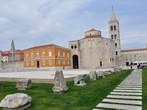
Salona is a historically rich archaeological site and ancient Roman city near the present-day Dalmatian town of Solin, located just a few kilometers northeast of Split. Founded in the 3rd century BCE and destroyed in the 7th century CE, Salona was once the capital of the Roman province of Dalmatia and is now one of Croatia’s largest and most important archaeological sites, showcasing a wealth of heritage that stretches back to the first millennium BCE and reveals the prosperity of the Roman Empire in this region.
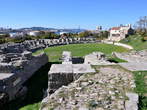
Established in the 3rd century BCE, the city flourished during the Roman period, becoming a major trading, cultural, and political center with tens of thousands of inhabitants. Salona boasts numerous remnants of ancient buildings, including Roman basilicas, an amphitheater, baths, an aqueduct, and defensive walls, all testament to the grandeur and sophistication of Roman architecture. The amphitheater, built in the 2nd century CE, is especially impressive, once accommodating over 18,000 spectators for gladiatorial games. The Salona baths formed a public bathing complex where citizens gathered to relax and socialize, while churches and basilicas served as religious hubs for the early Christian community. Of particular interest are the remains of Salona’s aqueduct, which supplied fresh water to the city from the Jadro River. Beyond its remarkable Roman heritage, Salona also preserves early Christian monuments, revealing its role as one of the first centers of Christianity in the region. The City of the Dead, or the Necropolis of Manastirine, is an early Christian burial site with remains of tombs and monuments where many martyrs were buried. Visitors can also explore the remnants of basilicas and certain tombs dating from the 4th and 5th centuries, which attracted pilgrims from across the Roman Empire. Today, Salona is a popular destination for history and archaeology enthusiasts and serves as a cultural and educational center where visitors can delve into Roman history while enjoying views of the surrounding hills and Dalmatian coast.
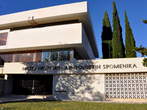
Many valuable artifacts and statues uncovered during excavations in Salona are displayed in a nearby museum in Solin. This archaeological park provides insight into the daily life, religious practices, and art of the former Roman civilization, offering a unique journey through time.
 HR-CRO - Croatia
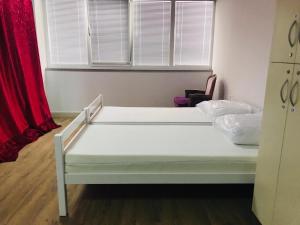 SplitBowling Hostel