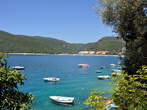
Plomin Bay is a narrow, deeply indented sea inlet on the eastern coast of Istria in Croatia, in the northern part of the Kvarner Bay, near the settlement of Plomin. Due to its elongated, fjord-like shape, it is also hydrologically and geographically interesting, as it cuts deeply into the mainland and quickly narrows toward its inner part, where it transitions into the port area of Plomin Luka.
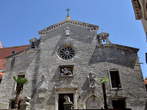
Plomin Bay is well protected from the open sea, especially from southern and western winds, while the effects of the bora wind can be more pronounced in the narrower upper section. The seabed drops relatively quickly into greater depths, which is characteristic of the eastern Istrian coast, where the coastal relief continues steeply into the seabed. This allows access for larger vessels in the lower part of the bay, although today maritime traffic is mostly limited to local and industrial use. In the bay lies Plomin Luka, a small port where mainly local vessels and smaller boats are moored. The water is calm and well sheltered, which is why the bay has historically been important for port activities. A significant influence on the appearance of the bay is also the nearby Plomin thermal power plant, located directly on the coast. This industrial facility was built precisely because of the favorable natural conditions – deep water, shelter, and easy sea access – and today represents an important energy facility in the region. Despite the industrial presence, parts of the bay remain relatively quiet, with low traffic and a local character, while along the coast rocky sections, sparse vegetation, and occasional access points to the sea alternate. The surrounding area is more hilly and covered with typical Istrian vegetation. Above the bay, at an elevation of approximately 160–170 meters, lies the historical settlement of Plomin. The place has a very long history, as it was known in antiquity as Flanona and was an important Roman settlement. Remains of Roman foundations, medieval architecture, and rich cultural heritage are still visible today. Among the most important landmarks are the Church of St. George and the well-known Glagolitic Plomin inscription, one of the oldest monuments of Croatian literacy. Today, Plomin combines several different characteristics: a historical village with viewpoints, a port area in Plomin Luka, and an industrial environment.
This contrast between the natural shape of the bay, the historical settlement, and industrial infrastructure gives the area a distinctive character and sets it apart from more tourist-developed parts of Istria. The bay also has significant landscape value, as sea, steep coastal cliffs, an old settlement on a hill, and an industrial zone along the shore all come together in a single view, creating one of the most recognizable contrasts in this part of the Adriatic.
 HR-CRO - Croatia
 PlominNice Apartment In Plomin With Jacuzzi