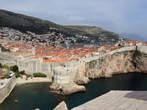
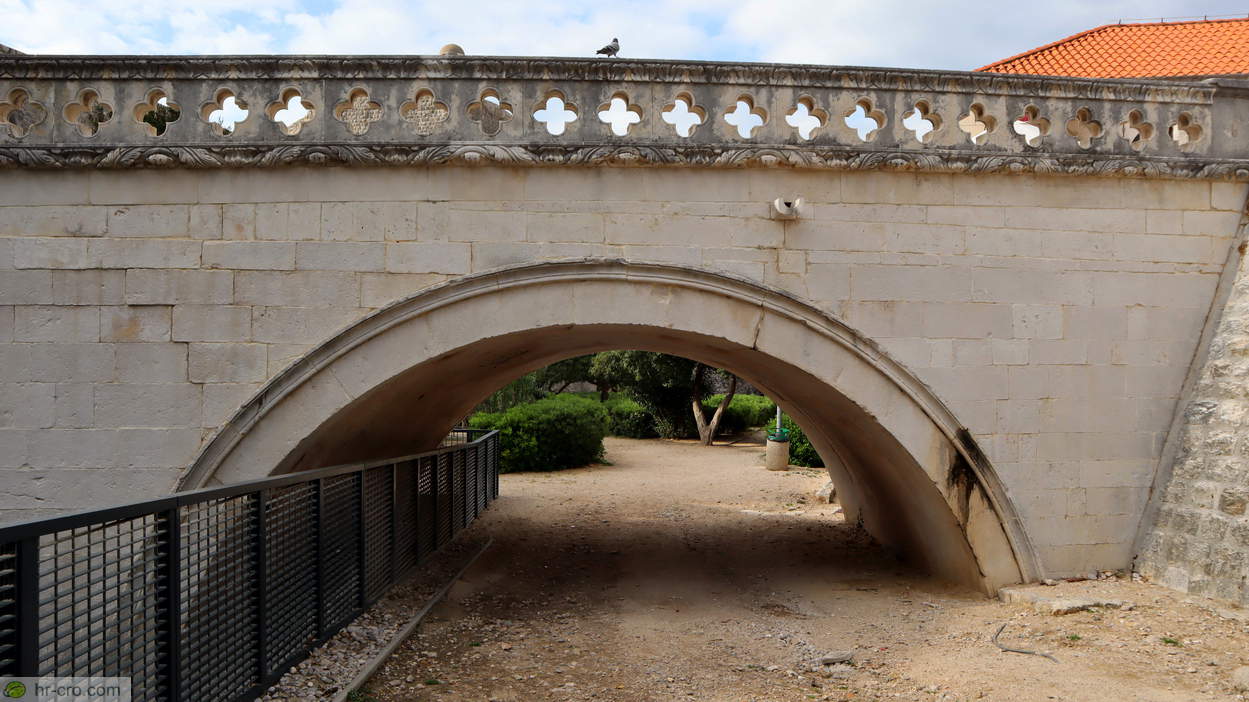
The Pile Gate in Dubrovnik is one of the most recognizable and historically significant entrances to the Old Town. Located on the western part of the city, it connects the historic center with the modern outskirts of Dubrovnik. The gate is part of the formidable defensive system that protected the city from various threats throughout the centuries, and it is also a key element of the city's identity.
It represents the first point of contact for visitors to the city and serves as an important symbol of protection, stability, and access to one of the most beautiful historical cities in the world. The Pile Gate was built in 1537 in the Renaissance style, at a time when the city's defensive system was already highly developed. The outer gate is massive and monumental, with arched stone structures that served an important function in protecting the city. The drawbridge over the moat, which was raised at night to secure the entrance, allowed for control and management of access to the city, which had been subjected to numerous attacks in the past. The drawbridge remains one of the key features, symbolizing the strategic importance of these gates in the city's defense. Above the main entrance is a statue of Saint Blaise, the patron saint of Dubrovnik, who historically symbolized the spiritual protection of the city. This symbolic image of the saint is not only a religious motif but also a reflection of Dubrovnik's strong connection to its protector, whose feast and cult played an important role in the city's spiritual life. Saint Blaise, depicted at the gate, represents protection from all misfortunes, including attacks, wars, and diseases. The inner gate, which leads directly into the heart of the Old Town, is adorned with exquisitely crafted stonework, showcasing the finesse of Renaissance and Gothic architecture. Between the outer and inner gates lies a small square, which once functioned as a checkpoint for identity verification and access control. This area was also historically a place for trade or gathering for visitors entering the city. Passing through the Pile Gate brings visitors directly to the main street, Stradun, which is one of the most recognizable and visited streets in Dubrovnik. Stradun is a vibrant center, full of shops, restaurants, and historic buildings, offering an authentic experience of the ancient city.
Beyond its architectural and historical value, the Pile Gate also stands as an important symbol of Dubrovnik as a UNESCO World Heritage Site, as it is directly connected to the rich history and cultural heritage of the city. For those visiting Dubrovnik, the Pile Gate offers the first glimpse into the city's remarkable history and culture. Walking through these majestic gates is an unforgettable experience that allows visitors to feel the pulse of this historic city and discover the treasures hidden within its walls.
 HR-CRO - Croatia
 DubrovnikApartments ZoomZoom