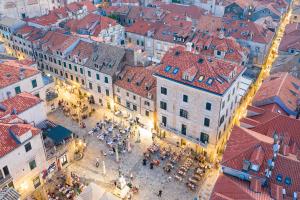
Dubrovnik is the most famous tourist town in southern Dalmatia, Croatia, on the Adriatic Sea. It is a seaport, the center of the Dubrovnik-Neretva County and one of the most popular tourist destinations in the Mediterranean.
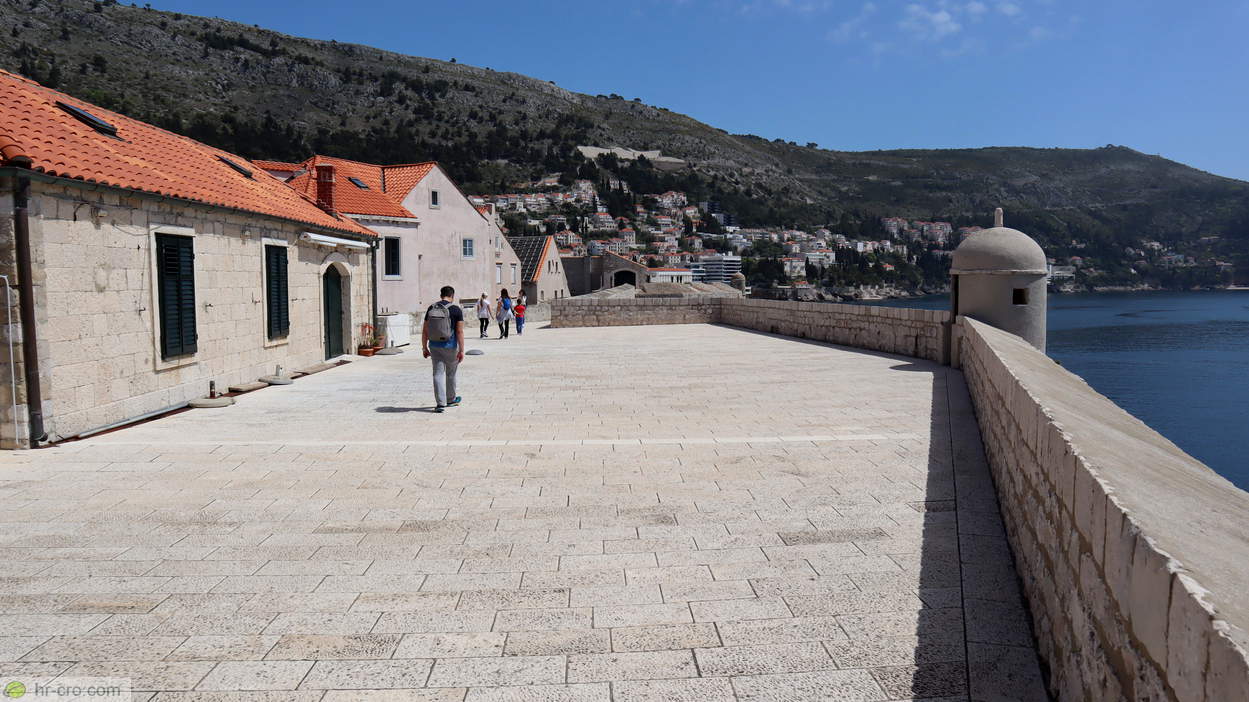
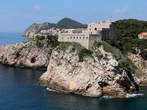
The city was added to the UNESCO World Heritage List in 1979 in recognition of its fortified old town and outstanding medieval culture. It is one of the biggest pearls of the Adriatic and the Mediterranean. Dubrovnik's city walls were built from the 8th to the 17th century for defensive purposes. It is considered one of the best-preserved and largest defense systems from the Middle Ages. Today it is known as one of the most monumental fortification monuments in Europe. The walls of Dubrovnik are one of the most visited attractions of the city of Dubrovnik. They were built to protect the city from unannounced enemy attacks. The entire defense system consists of three forts, two towers, six bastions, a main wall and some other elements. The construction of the walls began in the 8th century. In the 13th century, the walls got their current extent, then they expanded and strengthened them until 1660. The city walls are up to 22 meters high, 4 to 6 meters wide from the land side, and from 1.5 to 3 meters from the sea side. Dubrovnik's walls are about 2 kilometers long and are protected by towers on four sides. The Ivan fortress is located on the sea, southeast side, and the Minceta tower is on the northwest land part of the city. The tower of the Minceta is the highest point of the Dubrovnik walls. The fortress from the 14th century offers a magnificent view of the open sea and the city. The Revelin fort, which is on the opposite side, dates back to the 16th century and overlooks the city harbor and the eastern entrance to the city, the Ploce Gate. Among the famous builders who participated in the construction of the walls were Marin Drzic, Michelozzi of Florence, Juraj Dalmatinac, Simeon and Onofrio della Cava, Bernardin of Parma, Antonio Ferramolino of Bergamo, Bettacci of Florence, Bernardin of Parma, Zanchi of Pesaro and Mateucci from Fermo. There are three entrances to the city walls, namely at the fortress of St. Luke by the gate of Ploce, at the fortress of St. Ivan and on Stradun by the gate of Pila.
The walls of Dubrovnik offer a spectacular view of the sea, the old part of the city and the island of Lokrum. The walk can last from around one hour to more than two hours. Guided tours are available to individuals and groups throughout the year and lead through the gates of Pila.
 HR-CRO - Croatia
 DubrovnikThe Pucic Palace






 1
1