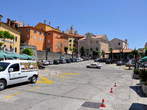
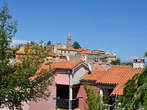
Labin lies in eastern Istria, where its historic centre rises above the newer town. In its upper quarter, streets between the houses often continue as steps.
 1 May Street connects several such buildings along a short stretch of the old centre.
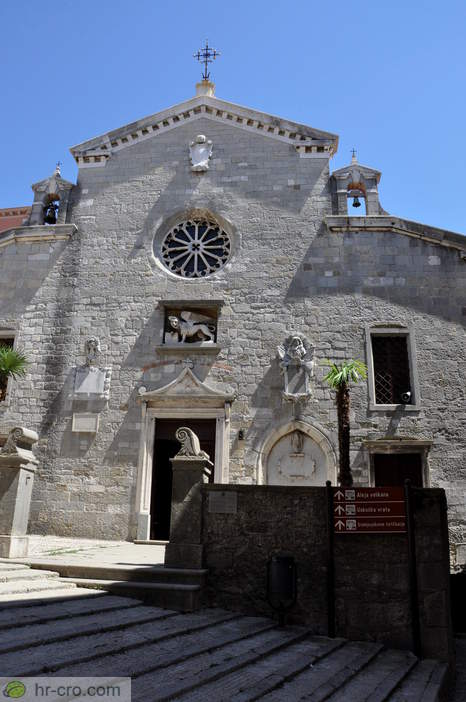
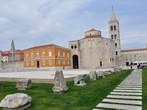
The Parish Church of the Nativity of the Blessed Virgin Mary stands on this street. Steps lead up to its stone façade; immediately nearby are  Scampicchio Palace,
  Battiala-Lazzarini Palace and the smaller
  Church of St. Stephen.
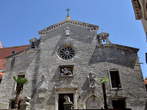
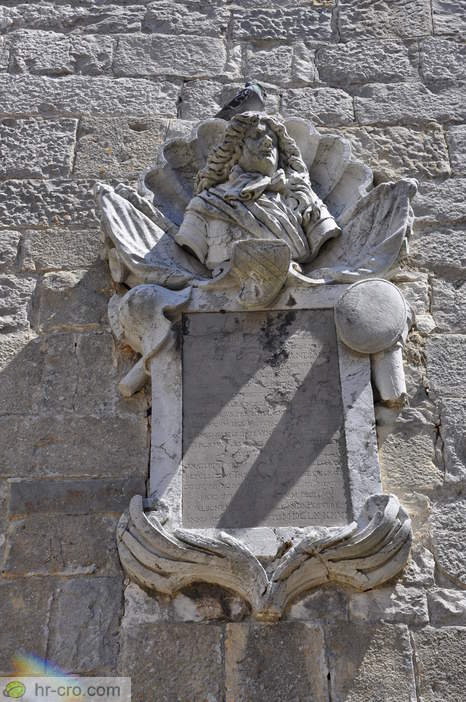
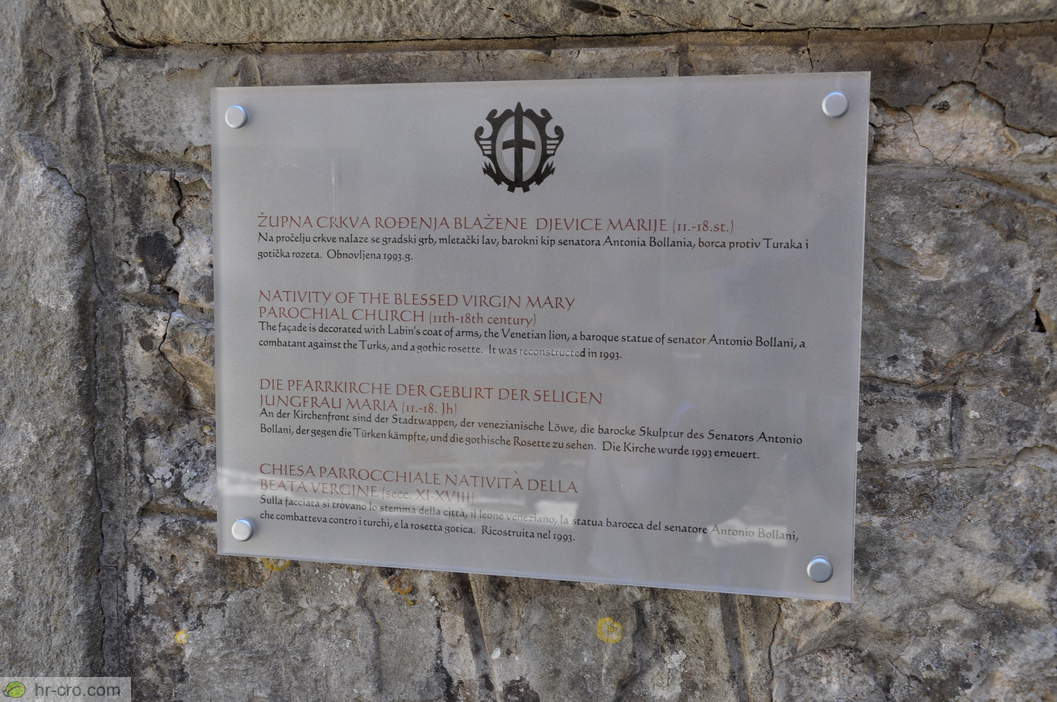
According to the town tourist board, the church was built in 1336 on the site of an earlier small church. It was substantially enlarged and remodelled in 1582, with later work adding further layers; its present appearance is therefore not the creation of a single period. A Gothic rose window survives on the late-Renaissance façade. Below it, the Venetian lion was set into the wall in 1604, and a Baroque bust of Senator Antonio Bollani was added in the late 17th century. These emblems also speak to the political setting in which the church changed.
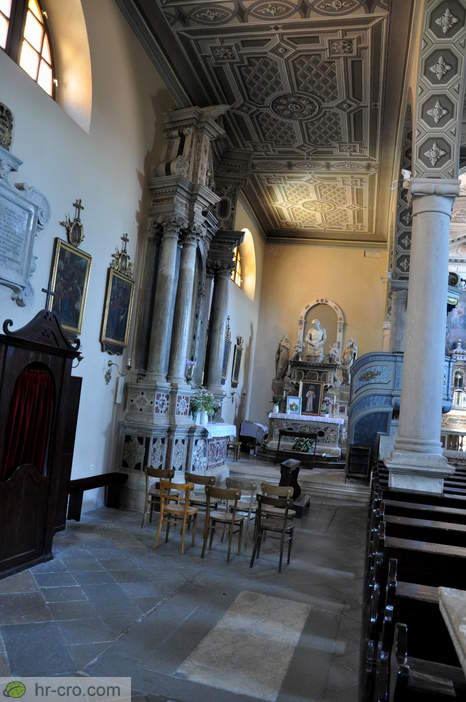
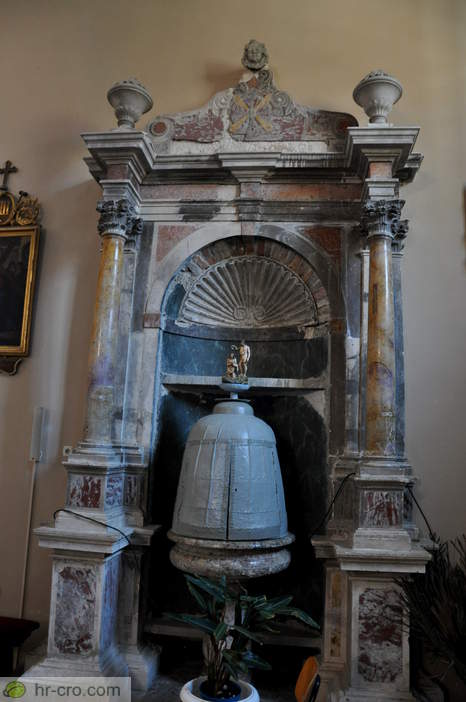
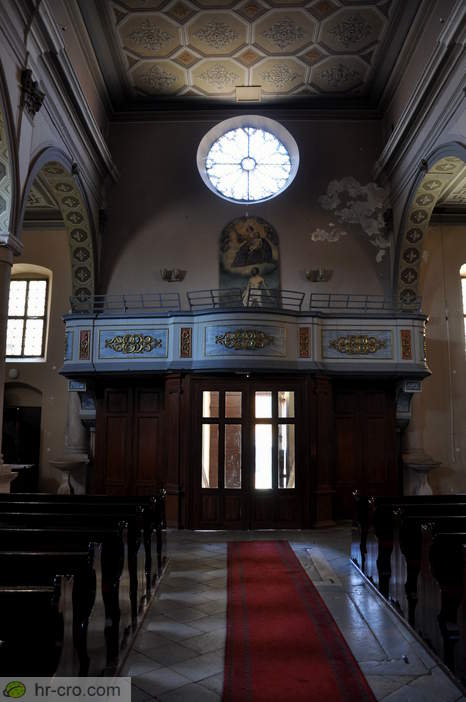
Inside are three aisles. The central nave draws the eye towards the high altar, with columns and side altars on either side and a choir gallery above the entrance. The church has six marble altars; relics of St. Justus were brought here from Rome in the 17th century. Among its works of art are an altarpiece by Natale Schiavone, a 17th-century painting of Our Lady of Mount Carmel attributed to Palma the Younger, and Stations of the Cross by the Labin painter Valentino Lukas. These furnishings show that the church's history did not end with its medieval construction.
Outside, the church architecture meets the town's noble surroundings. Scampicchio Palace was once linked to the church by a private passage, while the  Bell Tower of St. Justus stands a little apart, by the highest part of town. Although separate from today's parish church, the bell tower and church together mark its wider sacred setting in Labin.
A walk from façade to interior reveals the difference between a relatively restrained stone exterior and richer altar furnishings. The church is therefore important both for understanding the layout of the old town and for seeing the art gathered here over the centuries.
 HR-CRO - Croatia
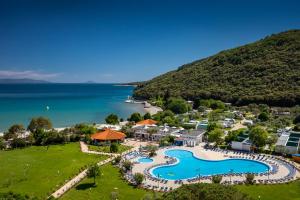 RabacCamping Residence Oliva