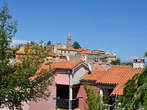
Labin lies in eastern Istria, where its older quarter rises above the newer parts of town. Its historic centre brings together narrow streets, town houses and former noble residences.
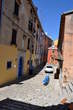
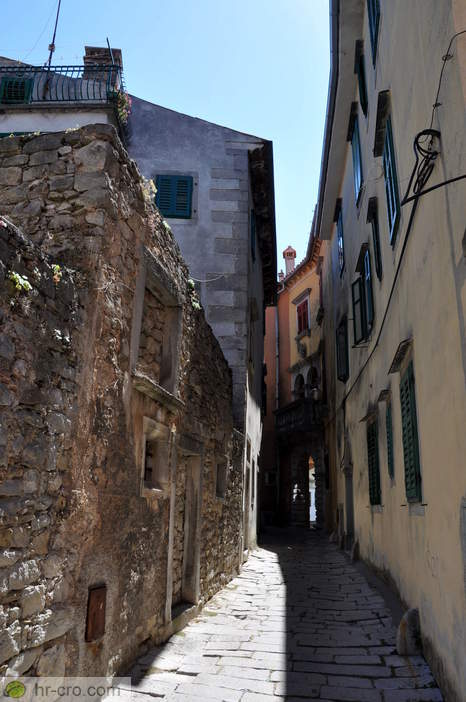
 Giuseppina Martinuzzi Street winds along this edge of town between closely packed houses and arched passages.
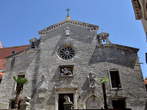
Franković-Vlačić Palace stands along its bends. Arched passages open from the street; the façade with its balcony and the inner courtyard show how town houses made use of space beside the former defensive edge.
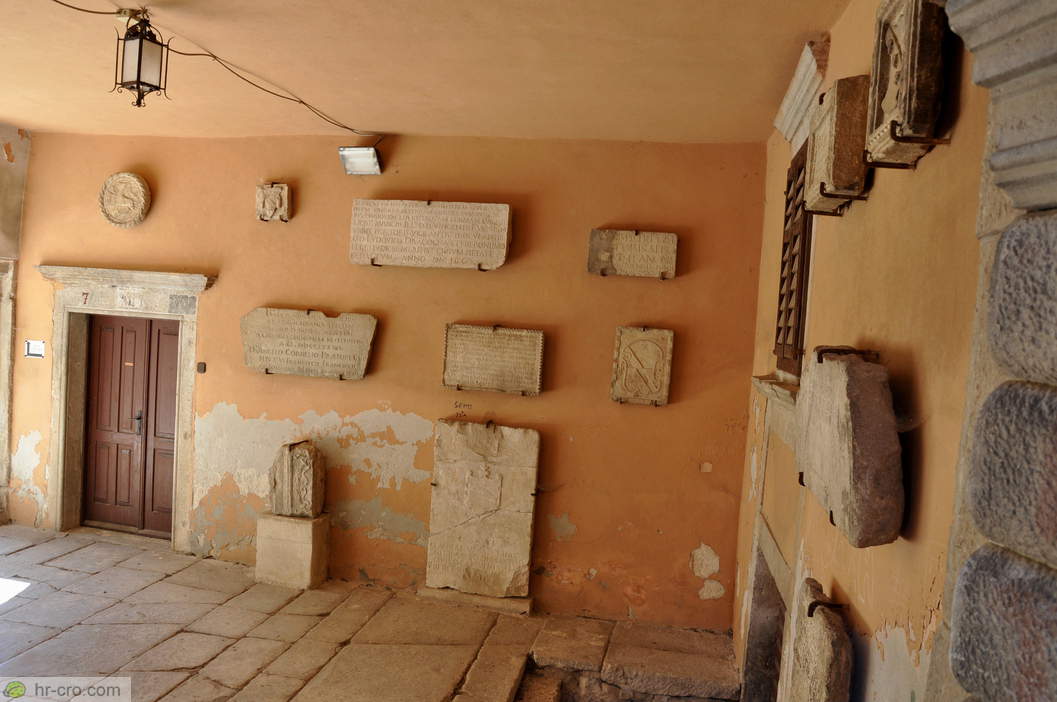
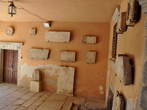
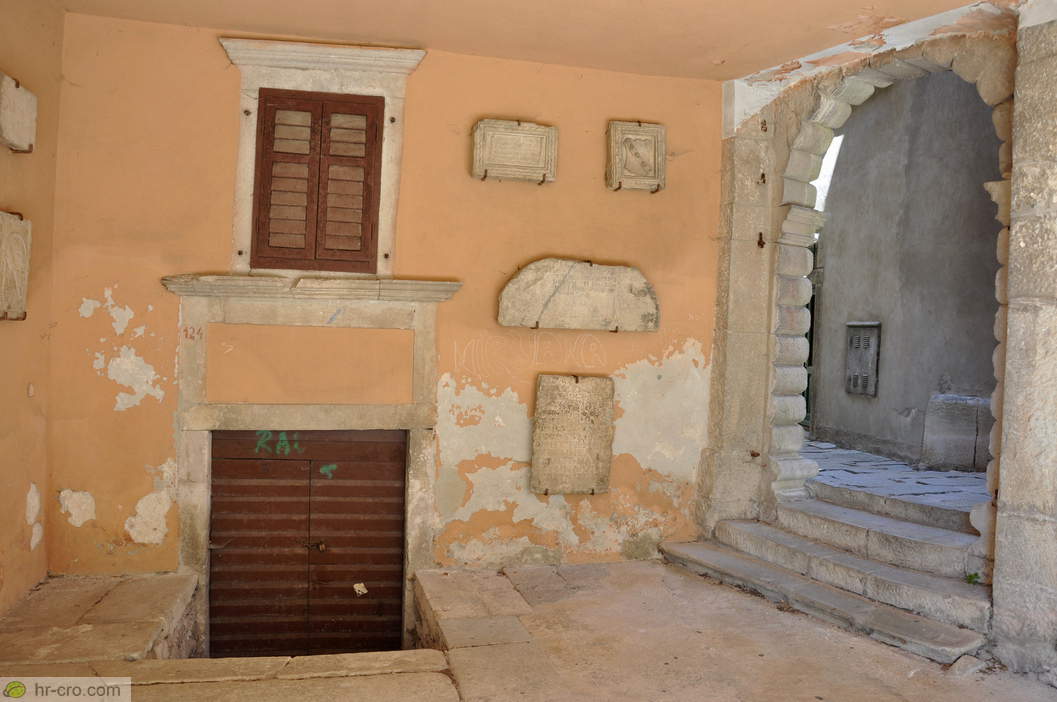
The Baroque palace was built in the 17th century by the northern section of the town walls. Part of the older fortifications survives within the complex, while an open atrium with stone fragments occupies the ground floor. The passage from the tight street to the brighter courtyard shows how the palace combined urban living with the older defensive boundary.
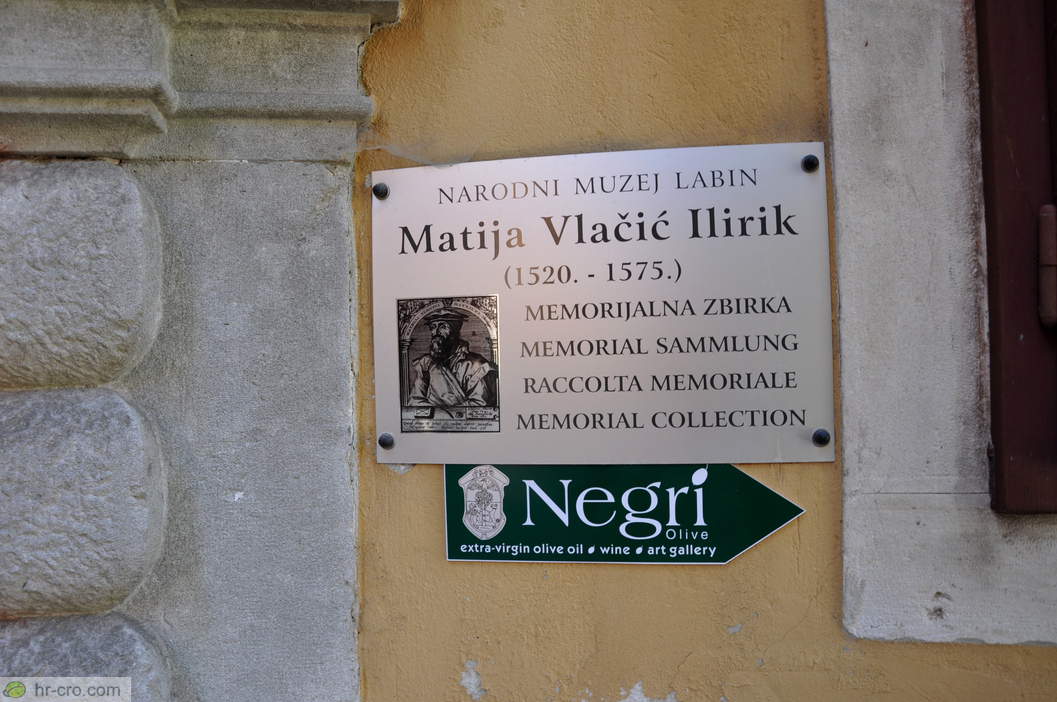
The building is associated with Matthias Flacius Illyricus, born Matija Vlačić Ilirik in Labin, a theologian, philologist and important voice of the 16th-century Reformation. The palace houses the Memorial Collection of Matthias Flacius Illyricus. It presents his life, the places where he worked and his writings; the palace's name thus identifies both a historic house and the person who gives it particular cultural significance.
The collection introduces his home environment, the stages of his life and his written legacy. After leaving Labin, Flacius worked in several European cities and devoted himself to biblical interpretation and church history. His well-known works include the Key to Scripture, the Catalogue of Witnesses to the Truth and the Magdeburg Centuries. The collection thus explains how someone from an Istrian town took part in the religious and scholarly debates of his time across Europe.
From the street façade and commemorative plaque, arcades lead into the atrium. It is worth viewing the palace together with the surrounding houses and  Negri Palace: like other noble town residences, it forms part of a dense urban fabric altered many times, not a standalone building on an open square. A visit to the collection then connects the stone house with the person for whom it is best known today.
 HR-CRO - Croatia
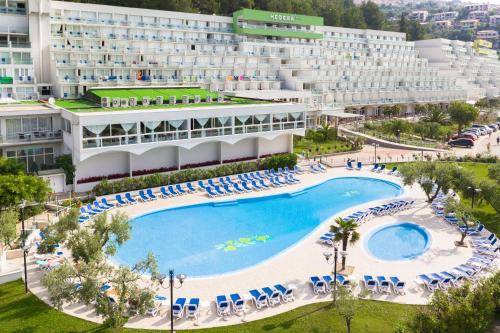 RabacHotel Hedera - Maslinica Hotels & Resorts