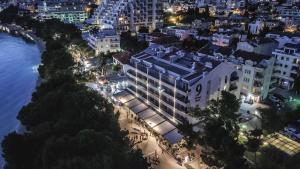
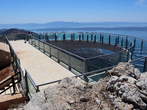
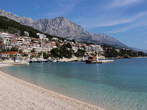
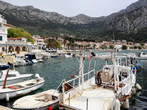
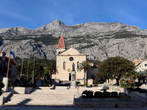
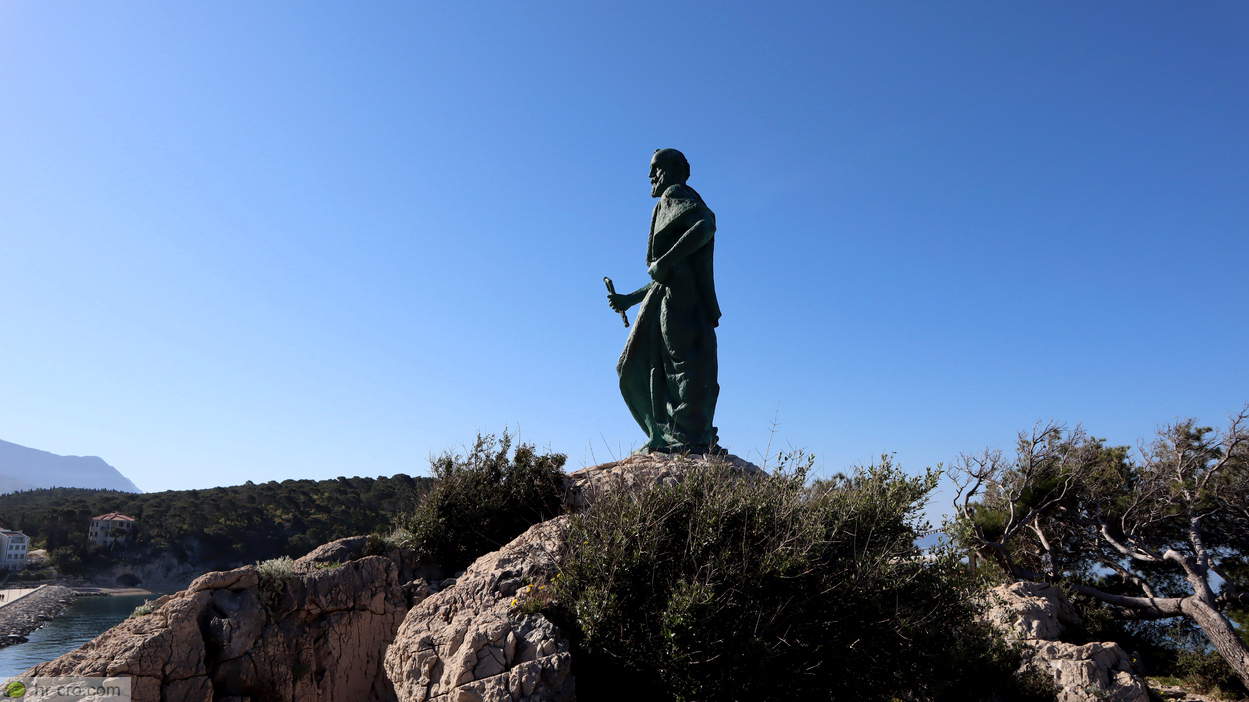
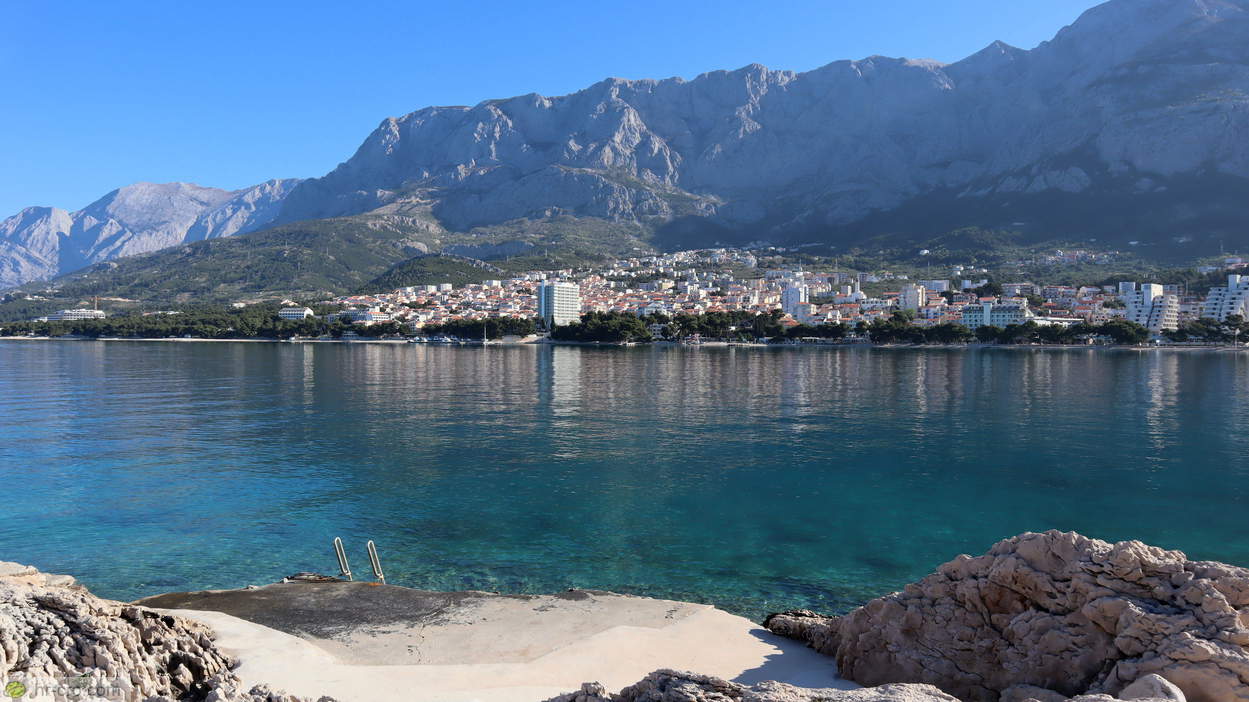
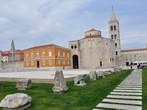
Makarska is a tourist town and port, which stretches at the foot of the Biokovo Mountains along the main road Split-Dubrovnik and belongs to the Split-Dalmatia County. The city is located in the bay closed by the peninsula of St. Peter and Cape Osejeva.
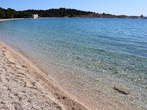
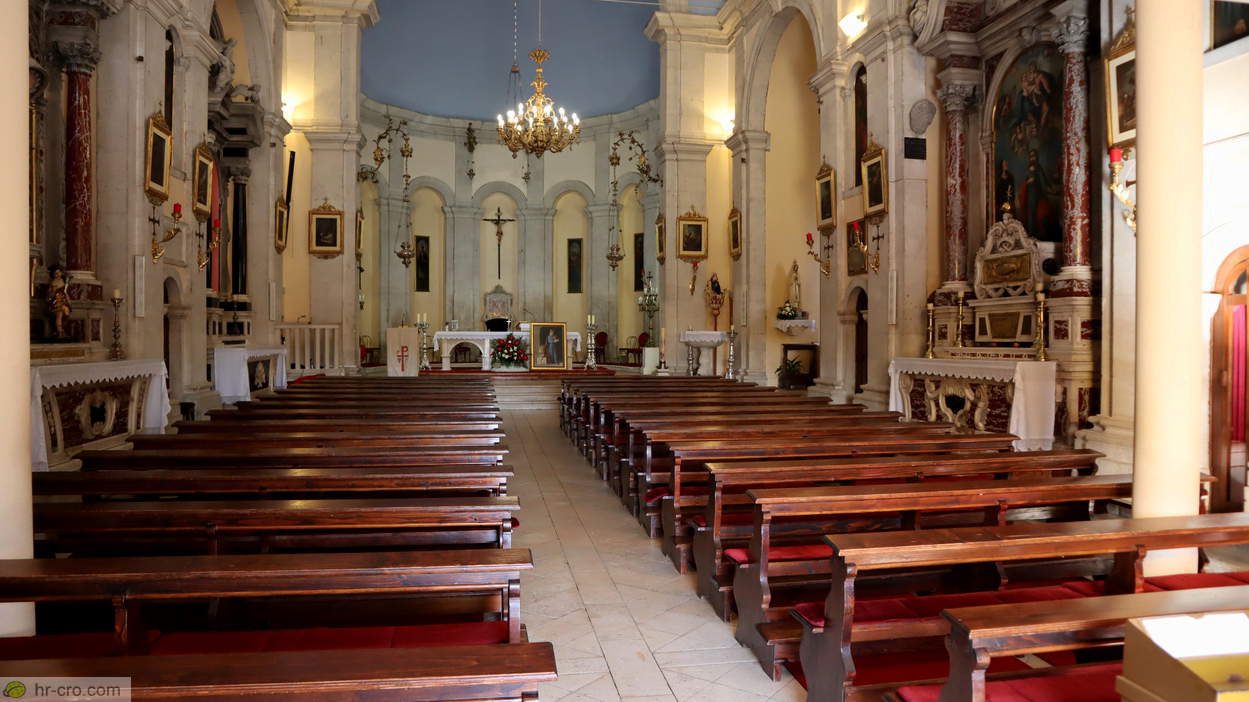
Makarska is the center of the Makarska Riviera. The main economic activity of Makarska, as well as the entire region, is tourism. It stretches between the municipalities of Brela and Gradac. It developed along the sea coast and at the foot of the mountain ridge Biokovo. Makarska is the center of the Makarska Riviera. The main economic activity of Makarska, as well as the entire region, is tourism. It stretches between the municipalities of Brela and Gradac. It developed along the sea coast and at the foot of the mountain ridge Biokovo. Makarska is connected to the island of Brac by a ferry line. The climate is Mediterranean with a strong wind in winter. The city is known for its promenade surrounded by palm trees, where there are many cafes, restaurants, bars and boutiques overlooking the harbor. Makarska is known for one of the most beautiful beaches in the Adriatic. It is about 1.5 kilometers long and surrounded by a pine forest and a pleasant park. There are several larger hotels along the beach, as well as a camping area. Makarska has a varied historical past. It is said to be named after the nearby village of Makru. The first inhabitants of the area of today's Makarska were the Illyrians, who founded the settlement of Muccurum in the 4th century. In 887, in September, the Battle of Makarska took place between the Venetian Republic and the Neretva Principality, in which the Neretvans won. The name Makarska is first mentioned in a document from the 16th century, during the Turkish conquests. The Turks had an army and an imperial tax office in Makarska. Under Turkish rule, the place came under Venetian rule and then under the Habsburg Monarchy. After Napoleon's victories in the early 19th century, Makarska fell under his rule. Napoleon promoted culture and built roads connecting Makarska with other coastal towns. A monument to Marshal Marmont, now known as the Napoleonic Monument, was erected at the western entrance to the city. Although Napoleon encouraged the development of culture and road connections with Makarska, Austria-Hungary was responsible for the flourishing of tourism. The biggest cultural and historical sights are the Franciscan monastery, the parish church of St. Mark, the baroque church of St. Philip, the remains of the church of St. Peter from the 15th century, a monument to Napoleon's Marshal Marmont, governor of the Illyrian provinces and some interesting Baroque buildings. In the Franciscan monastery, the church was turned into a mosque during the Turkish rule.
There is a rich and interesting collection of shells on display, the monastery also has a library, archive and a rich collection of paintings and works of art. The Church of St. Mark houses icons from the 16th century, various art objects and portraits of Makarska bishops, as Makarska was the seat of the diocese until 1828.
 HR-CRO - Croatia
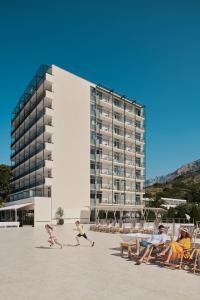 TučepiBluesun hotel Neptun - All inclusive