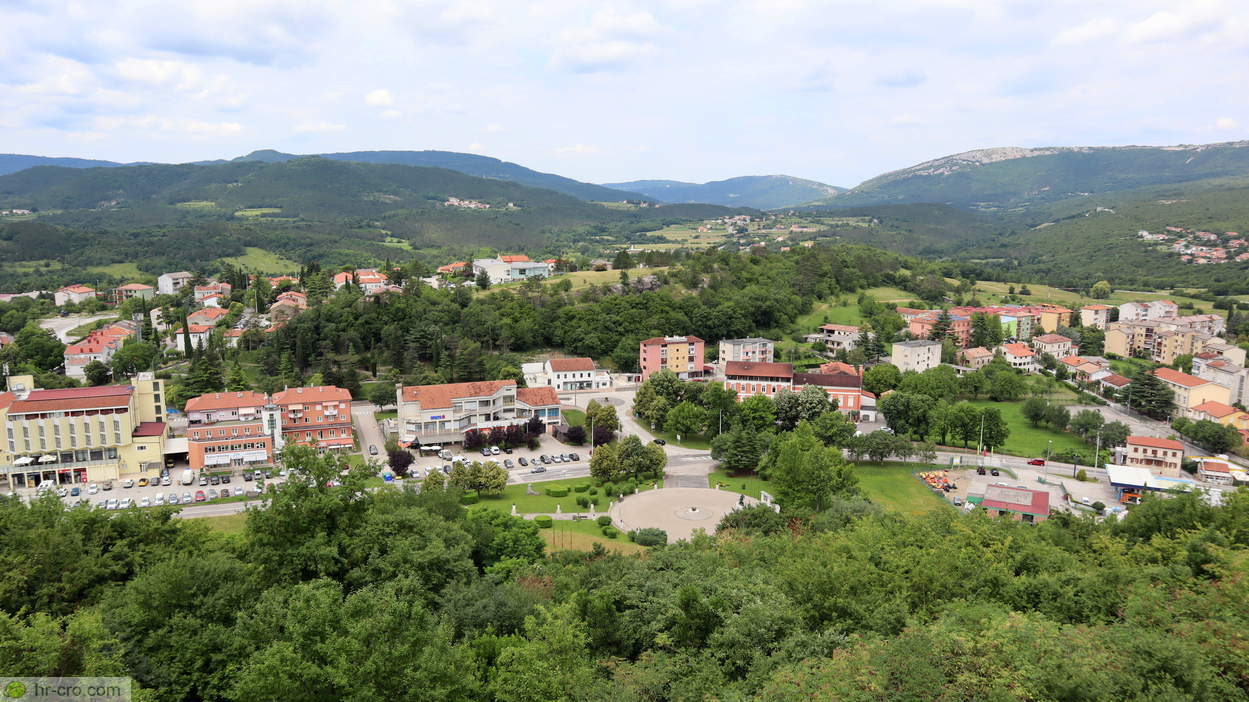
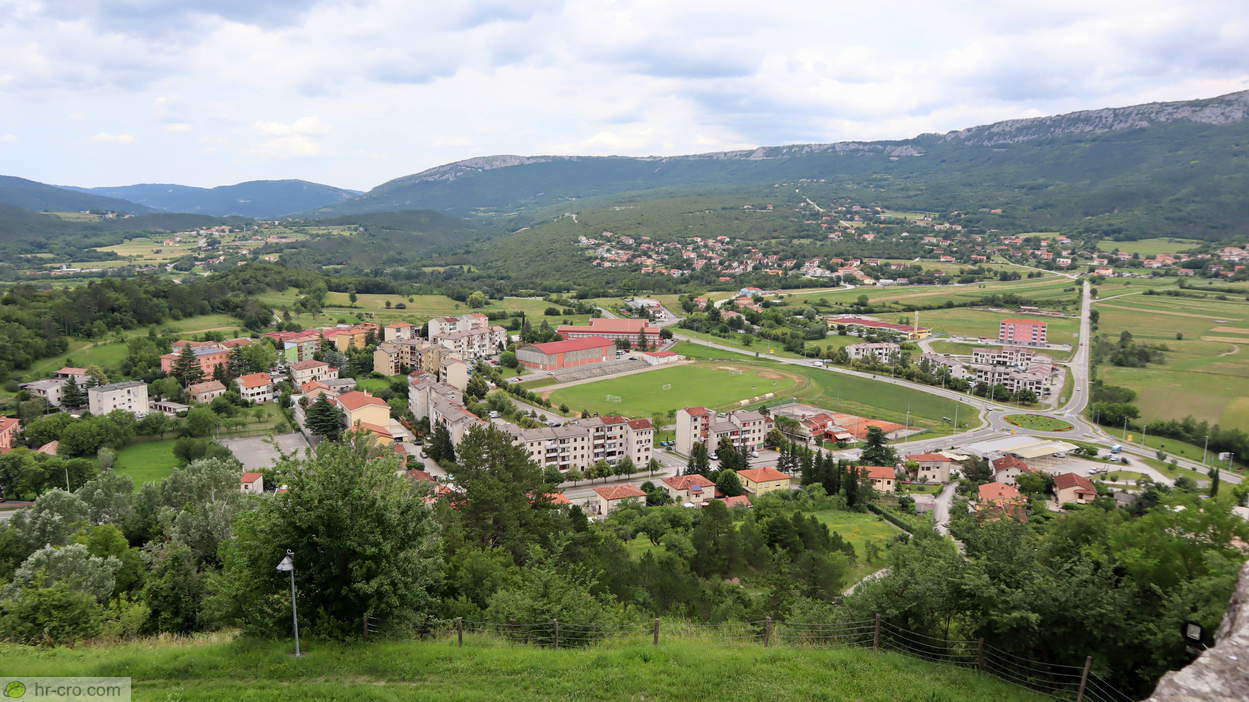
Buzet is a town in the northern interior of Croatian  Istria, set above the upper Mirna valley beneath the slopes of Ćićarija. It is defined by two contrasting urban layers: a fortified historic core on an isolated hill and the newer lower district of Fontana. Its stone skyline, Venetian heritage, commanding position and association with the surrounding truffle country make it one of inland Istria's most distinctive towns.
A settlement known as Pinguentum existed here in antiquity, while a fortress developed in the Middle Ages. Centuries of Venetian administration strongly shaped the present town. Houses grew along the defensive edge, entered through the southern Vela Gate and northern Small Gate. Narrow streets therefore bind fortifications, palaces, churches, cisterns and former civic buildings into a dense urban whole.
A walk through the  Old Town begins at
 Vela Gate and the
 southern bastion. The main square contains the
 Parish Church of the Assumption of Mary and its separate
 bell tower. Important buildings include
 Bigatto Palace and the Regional Museum, the
 Venetian storehouse, the
 Fontico and
 Bembo Palace, while the
") Small Cistern and
") Great Cistern recall the town's water supply.
The  Church of St George stands at the north-eastern edge, while the cemetery
 Church of St Vitus lies below the southern approach. Fontana, the newer Buzet of public buildings, streets and the central square, developed on the plain below. The contrast between upper and lower town is essential to understanding Buzet today.
Buzet is also known as the town of truffles. Forests beside the Mirna provide habitat for white and black truffles, while the wider Buzet area offers hiking and cycling routes, karst landscapes and excursions across northern Istria. The town is both a historic destination and a base for exploring the peninsula's interior.
The town developed from a prehistoric settlement and Roman Piquentum into a medieval fortress. After 1420 the Venetian authorities strengthened its walls, and in 1511 Buzet became the seat of the Captain of Rašpor, the military governor of Venetian Istria.
Visitors should distinguish the upper historic core from the lower town: the height difference means that exploring involves some walking. Views from the walls explain the position above the Mirna, while the lanes reveal the compact scale of the fortress town. Museums and church interiors have their own opening hours.
 HR-CRO - Croatia
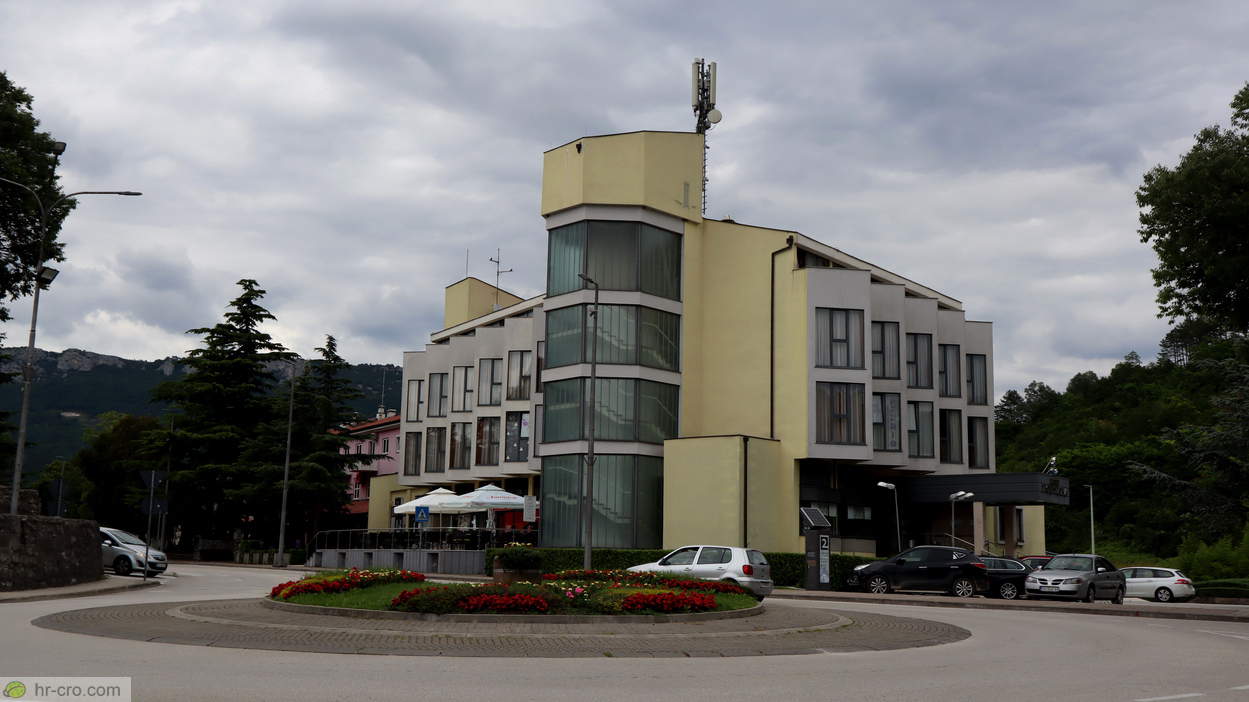
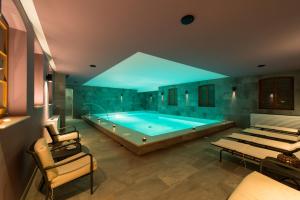 BuzetBoutique Hotel Vela Vrata