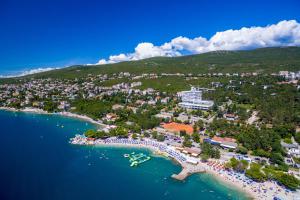
Crikvenica is a seaside town in the  Kvarner, about 35 kilometres south-east of Rijeka. It developed at the mouth of the
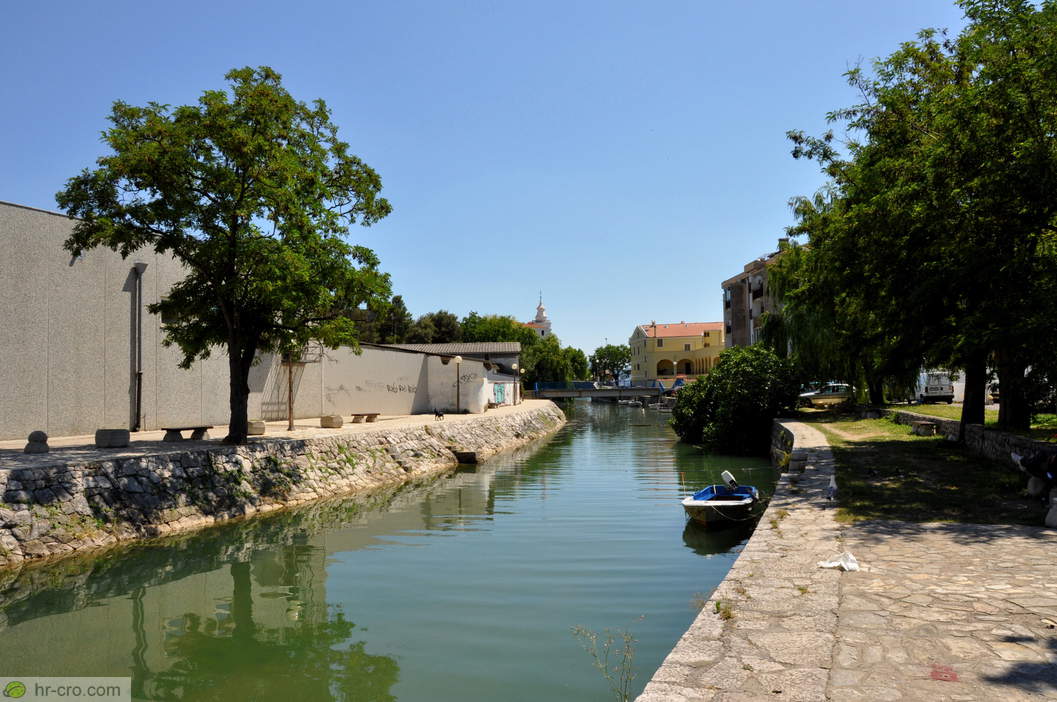
  Dubracina, where the Vinodol valley opens towards the sea. The town now forms a compact waterfront settlement: its historic core, harbour, main square, parks and most urban beaches are connected by promenades and lie within walking distance of one another.
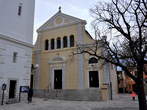
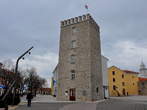
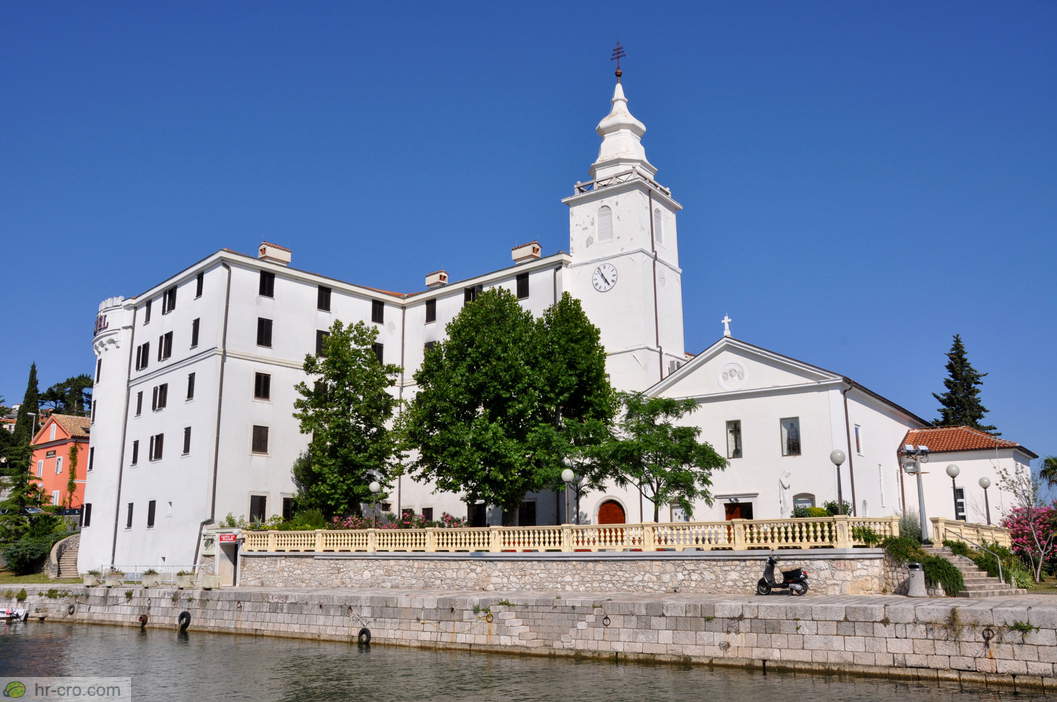
The origins of present-day Crikvenica are tied to nearby Kotor and the Frankopan family. In 1412 Prince Nikola IV Frankopan donated a monastery beside the Church of the Assumption to the Pauline monks; the charter contains the oldest known written mention of the name Crikvenica. The monastery and church became the nucleus of the settlement now recognised as  Kastel. After a fire devastated Kotor in 1776, the centre of parish life shifted even more decisively towards the coast.
Local people worked in agriculture, stoneworking and especially fishing, while the shortage of arable land made the sea increasingly important to the economy. Steamship traffic began to transform the town in the nineteenth century. Construction of the harbour started in 1870, the first Lloyd steamships called in 1873, and regular services to Rijeka made Crikvenica accessible to a growing circle of domestic and foreign visitors.
Tourism accelerated at the end of the nineteenth century. The first wooden public sea-bathing establishment opened in 1888, the first hotel in Crikvenica and the Croatian Littoral followed in 1891, and in 1906 Crikvenica was officially recognised as a climatic health resort and sea-bathing destination. Hotels Therapia and Miramare, villas, sanatoriums, parks and avenues followed, giving the former fishing settlement the character of a carefully planned health resort.
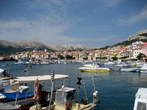
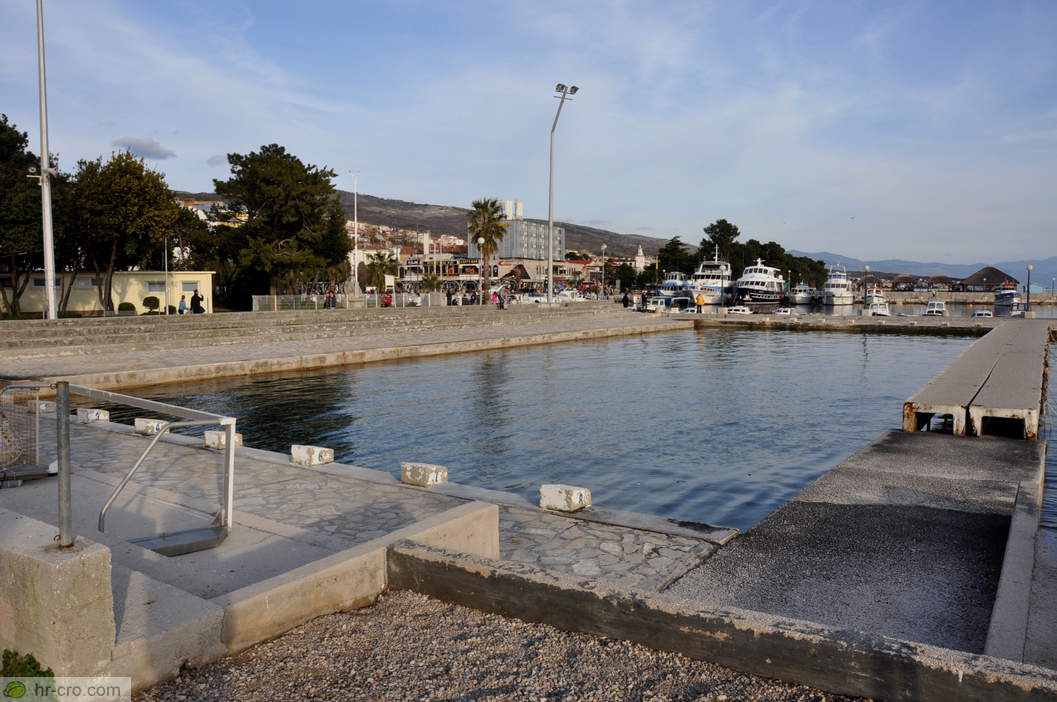
The modern centre opens onto the  town harbour and
  Stjepan Radic Square. Town streets, cafés, older façades and the waterfront promenade meet here. East of the square, the route continues towards the Dubracina, Kastel and Podvorska; westward begins
  Strossmayer Promenade, lined by parks and a succession of bathing areas.
Among the best-known beaches are the historic  Municipal Beach in the west and the more varied coves of
  Podvorska Beach beyond the old centre. The
  Town Museum offers a closer view of local history, while the
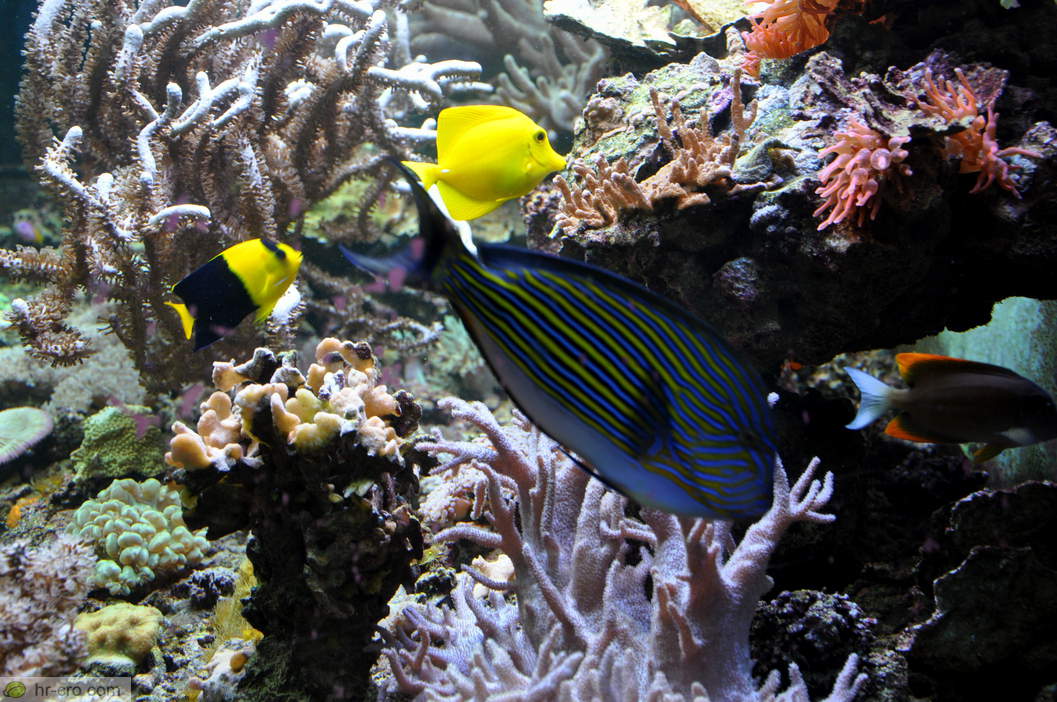
  Aquarium is a popular family stop. Over short distances, Crikvenica thus combines historic heritage, everyday town life, greenery and a long coastline that remains inviting outside the main summer season.
 HR-CRO - Croatia
 SelcePaviljoni Slaven